


 Sold out
 Sold out
 Sold out
 Sold out


Heat supply for housing industry, commercial enterprises and municipal properties
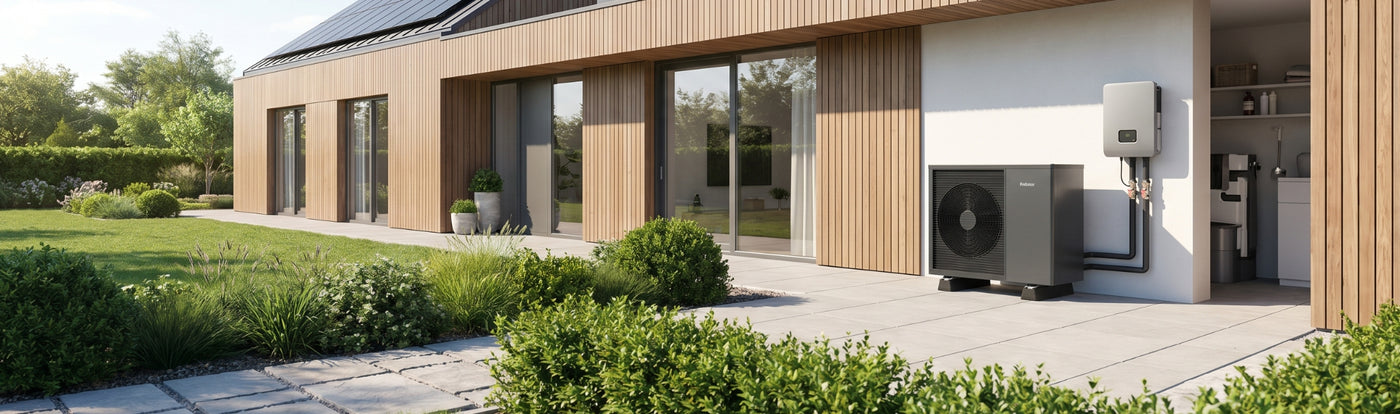
Terra Energy B2B heat pumps provide predictable heat for existing buildings and new construction. In the housing industry, standardized performance classes ensure rapid scaling in identical stairwells and technical rooms. For homeowners' associations and districts, central systems with hot water preparation and smart meter implementation can be realized. In commercial properties, air-to-water units cover the base load, while existing generators cover peaks. Municipal buildings such as daycare centers, schools, or administrative sites benefit from quiet technology that requires no fuel storage and can be easily combined with photovoltaics on the roofs. Uniform monitoring for multiple locations simplifies operation, maintenance, and reporting.

How to Find the Right Heat Pump for Your Project
The selection process begins with the heating load. This is determined by the building envelope, window areas, air exchange, and desired room temperatures. This results in the required unit size and temperature level. Check the installation site, the planned hydraulics, the desired hot water comfort, and the metering concept with a smart meter. Coordinate the control system with photovoltaics and any existing storage units. Pay attention to moderate sound power, correct condensate drainage, frost protection for the pipes, and easy accessibility for service. For operators with multiple properties, identical controllers, the same sensors, and uniform spare parts are the fastest way to achieve low operating costs.
Frequently Asked Questions
Does a heat pump work in an old building with radiators
Does a heat pump work in an old building with radiators
Yes. The decisive factor is the actual flow temperature required. After hydraulic balancing and a correctly set heating curve, many existing systems operate efficiently with flow temperatures below fifty-five degrees Celsius. Larger radiator surfaces or an additional small underfloor heating circuit further improve efficiency.
What power output do I need for my building?
What power output do I need for my building?
The correct size is determined by the heating load calculation. Oversizing leads to frequent cycling and reduces lifespan. A system that is too small runs permanently at high speed. Modern compressors adjust their output, but correct sizing remains the basis.
How to effectively combine a heat pump and photovoltaics
How to effectively combine a heat pump and photovoltaics
The system prioritizes runtime during sunny hours. A buffer storage smooths operation and a hot water tank absorbs high temperatures from solar power. With home storage and a smart meter, further loads such as e-mobility can be taken into account, increasing self-consumption and reducing peak loads.
What are the advantages of R290 as a refrigerant?
What are the advantages of R290 as a refrigerant?
R290 has a very low global warming potential and good heat transfer. Devices with this refrigerant operate efficiently and are future-proof. Installation follows clear safety rules for installation areas and ventilation, which a qualified specialist company implements.
How loud is an air-to-water heat pump and where should I install it
How loud is an air-to-water heat pump and where should I install it
Modern devices remain quiet when correctly designed. Sound pressure drops sharply with increasing distance. A free installation site with unhindered air intake and exhaust, a stable base, and vibration dampers prevent resonances. In sensitive areas, sound insulation reports and operating settings for the night help.

Quiet warmth from electricity: Smartly combining heat pumps with photovoltaics
Operating Principle and Key Figures
A heat pump uses ambient energy and raises its temperature level with the help of an electrically driven compressor. The most common variant in existing buildings is the air-to-water heat pump. It extracts heat from the outside air, transfers it to a water circuit, and thus feeds radiators, surface heating systems, and the hot water storage tank. Alternatives include brine-to-water systems with geothermal probes or collectors, as well as water-to-water systems that use groundwater. Crucial for efficiency is the ratio of heat delivered to electricity consumed. This value is described as the coefficient of performance (COP) in practice, also as the seasonal performance factor (SPF). The lower the required flow temperature and the milder the source, the better the efficiency. Those who set their system to a sensible heating curve achieve stable room temperatures with moderate electricity consumption.
Why Heat Pumps and PV are Economically Compatible
Electricity costs determine the operating costs of a heat pump. Self-generated electricity from the photovoltaic system significantly reduces these costs. During the day, the PV system supplies electrical energy, which the compressor uses directly. A well-designed buffer tank and a sufficiently dimensioned hot water storage tank shift part of the operating time to the productive midday hours. This increases the self-consumption rate and reduces the grid load. In conjunction with a home storage system, heat generation can also be further smoothed. The interplay is particularly beneficial if domestic hot water preparation is also electric, as high temperatures can be provided during times with plenty of solar power.
System Planning for Commercial, Housing, and Municipalities
In the B2B environment, predictable total costs, short installation times, and norm-compliant execution are important. For multi-family houses and residential quarters, modular air-to-water systems with a central control concept and separate hot water preparation are suitable. Housing companies benefit from uniform performance classes and standardized installation areas. In commercial properties and municipal properties, integration into existing building management systems is important. Load management with a smart meter adapts the compressor power to available power contingents, PV forecasts, and tariffs. For renovation projects, preliminary investigations such as heating load, hydraulics, and sound reports ensure approval and accelerate rollout.
Selection by Building and Heat Source
Existing buildings with higher flow temperatures work reliably with modern air-to-water units if hydraulics and control are correct. Surface heating systems allow particularly low temperatures and increase efficiency. Brine-to-water systems demonstrate their strengths with constant source temperatures. They are the first choice if drilling or collector areas are possible and continuous operation with a high seasonal performance factor is required. For pure domestic hot water preparation, compact domestic hot water heat pumps are suitable, which dehumidify cellar air and simultaneously generate hot water. Those planning a new quarter can provide monovalent solutions. For renovations in existing buildings, bivalent concepts with existing boiler technology as peak load are sensible if very cold days occur rarely.
Sizing and Efficiency in Everyday Use
A correct heating load calculation forms the basis. The unit size is designed for the standard outdoor temperature and the desired temperature level. Oversized systems cycle, undersized units constantly run at high speed. Both reduce lifespan and increase consumption. Modern compressors with inverters continuously adjust their power and harmonize well with PV generation, as they work efficiently at partial load when the sun shines. Upgrading the building envelope, hydraulic balancing, and a finely tuned heating curve often bring more than a larger unit size. For operation, low return temperatures, clean filters, and correct volume flow are also important.
Refrigerants, Safety, and Future Viability
R290, based on propane, is becoming established in many devices. The natural refrigerant convinces with a very low global warming potential and good thermodynamic properties. Safe installation follows clear rules for installation location, ventilation, and ignition source distance. Indoors, monobloc units handle the entire refrigerant management within the casing, split solutions route the refrigerant lines into the building and require certified personnel. For long-term operation, replaceable components and an openly documented service concept are important. This ensures that the system remains maintainable over its entire lifespan and adaptable to new requirements.
Hydraulics, Storage, and Heat Distribution
Hydraulics determine comfort and efficiency. A buffer tank stabilizes volume flow and switching frequency. The hot water storage tank delivers high tap capacities and uses PV electricity for the legionella function. Mixing circuits separate surface heating and radiators and allow different temperatures. Hydraulic balancing ensures uniform supply to all heating surfaces. Heating rods serve as emergency heating or as a targeted PV sink. Generally, a moderate power is sufficient, which is prioritized by the controller when there is surplus solar power.
Noise, Installation Locations, and Approval
Air-to-water units generate air movement and compressor noise. A low sound pressure level at the neighboring property is mandatory. Sound-optimized fans, run-on damping, and night setback reduce emissions. The installation location should offer free inflow and outflow and avoid resonances. Vibration dampers and a stable subfloor prevent structure-borne noise. In dense urban areas, sound insulation reports and defined operating times are recommended. For listed buildings or narrow courtyards, internally installed monobloc units are an option that relieves the outdoor area.
Electricity Tariff, Metering Concept, and Smart Meter
A separate metering concept with its own heat pump tariff can reduce operating costs if blocking times fall within PV generation or are bridged by storage. A smart meter creates the basis for dynamic tariffs and load management. The control prioritizes PV self-consumption without compromising comfort. With several large consumers such as e-mobility or commercial production, a load manager prevents expensive power peaks.
Funding, Financing, and Total Costs
The federal funding for efficient buildings supports the transition to electric heat generation. The exact funding landscape depends on the type of property, efficiency, and environment. For B2B projects, clear amortization calculations are important. These include investments, funding shares, electricity price scenarios, maintenance, reserves, and residual values. In combination with photovoltaics and storage, self-consumption rates are created that enable predictable total heat costs. Those who manage several locations benefit from standardized packages with identical control concepts, identical interfaces, and common spare parts lists.
Monitoring, Service, and Operation
Good monitoring shows temperatures, compressor run time, electrical power, and hot water series. Early detection of deviations prevents efficiency losses. Remote access facilitates the management of properties with many systems. Maintenance includes visual inspection, leak test, filter change, checking of safety valves, and an update of the controller software. With clear maintenance intervals and a spare parts strategy, operational safety and comfort remain high.
Emergency Power and Backup Power with PV and Storage
In the event of a power outage, modern storage systems continue to supply defined circuits. The heat pump can be part of this basic supply in many projects if power and starting current are suitable. Intelligent energy management reduces compressor power in island mode and prioritizes hot water only when needed. This preserves important functions and increases the operating time of the system in backup power mode.
Project Process from Inventory to Commissioning
The process begins with a structured assessment of the building, including heating load, hydraulics, insulation standard, and possible integration of photovoltaics and storage. This is followed by the design of the unit, storage, and pumps. The planning documents include sound prognosis, installation areas, electrical planning, grid connection, and metering concept. Installation is carried out with tested fastenings, frost-free laying, and proper ventilation. Commissioning includes control parameters for the heating curve and hot water, the release of blocking times, integration into monitoring, and instruction of operating personnel. This results in a reliable solution that provides heat reliably, quietly, and efficiently.